
Iran's navy said on Saturday, 14 November 2026, that three oil tankers caught fire after striking naval mines in and near the Strait of Hormuz, the narrow waterway between Iran and Oman that carries much of the world's seaborne oil. The reports come from Iranian state media and have not been independently confirmed.
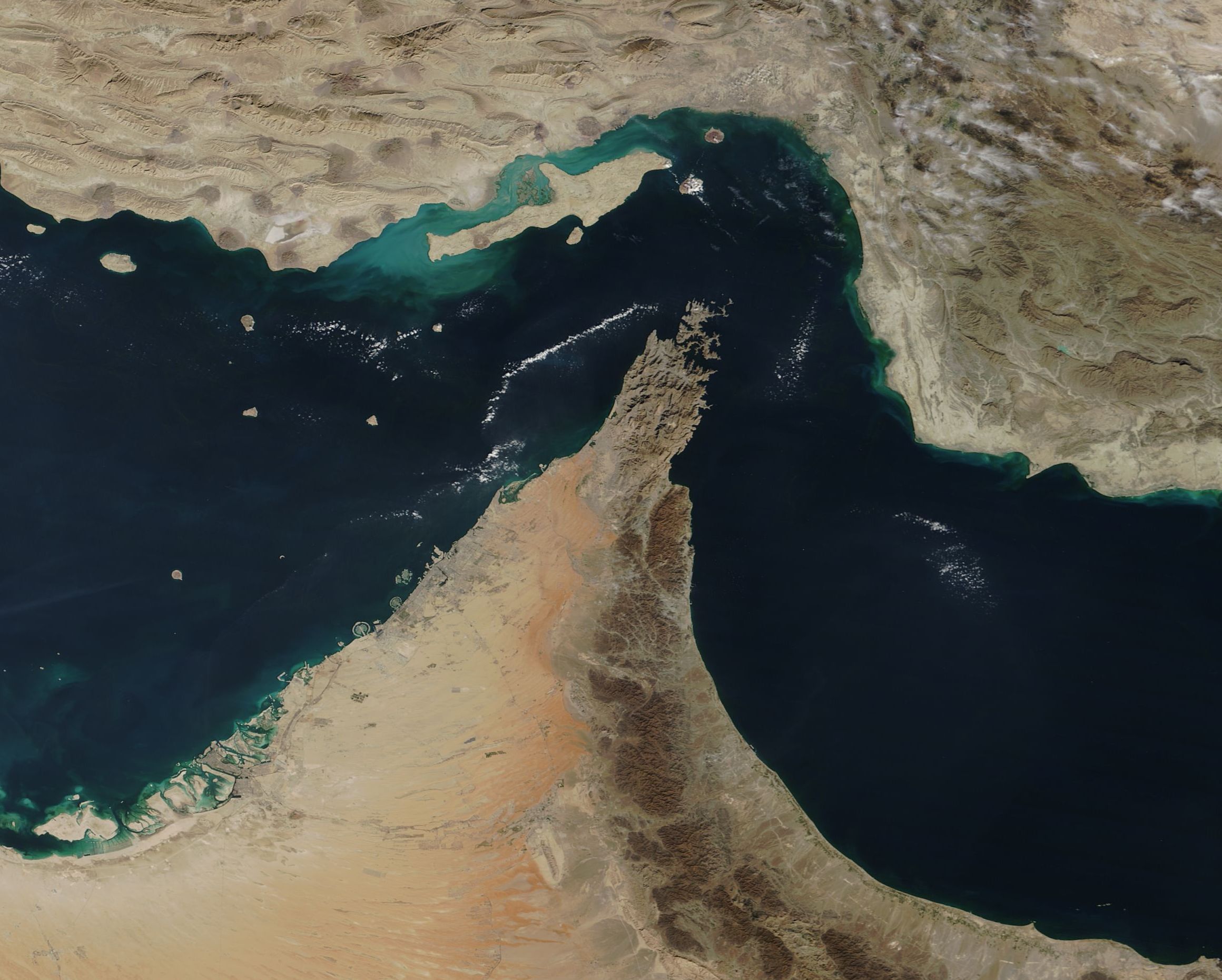
The Strait of Hormuz and Oman's Musandam Peninsula, seen by NASA's Terra satellite in December 2018. Photo: NASA GSFC MODIS Land Rapid Response Team, public domain, via Wikimedia Commons.
What Iran reported
One tanker struck a mine in the eastern part of the strait on Saturday morning, and two more hit mines later in the day, according to the reports. Iran's Revolutionary Guards navy said the two evening tankers were using a route Tehran calls unauthorised, had switched off their radar and tracking systems, and exploded and caught fire after hitting mines. One of the vessels was described as a supertanker. Iran's regular navy separately reported a third tanker, east of the strait, that struck a mine in a zone Tehran calls prohibited, caught fire and was forced to stop.
The statements named no ships, gave no flags, owners, cargoes or destinations, and reported no casualty figures.
What has not been confirmed
Reuters said it could not immediately verify the reports, which came only from Iranian military authorities. The UK Maritime Trade Operations centre, which monitors shipping in the region, had not confirmed the incidents at the time of publication. The US military has said it cleared the main shipping routes through the waterway of mines.
Why the Strait of Hormuz matters
The strait, about 33 kilometres wide at its narrowest, links the Persian Gulf to the Gulf of Oman and the Arabian Sea. It is the world's most important oil chokepoint, carrying large volumes of crude oil and liquefied natural gas to markets around the world.
Tehran has insisted since February, when war broke out with the United States, that vessels obtain its authorisation to cross the strait, and it has attacked ships it says broke its rules, as it tries to control the waterway and put pressure on Washington. Earlier in the week, Reuters reported that Iran claimed four tankers had been hit by explosions after entering areas Tehran considers restricted.
Energy security is also in focus this week as leaders of Pacific economies gather in Shenzhen for the APEC summit in Shenzhen.
What happens next
Shipping companies, insurers and oil markets will be watching for independent confirmation of the incidents, for any statement from the US military or maritime monitors, and for signs that more vessels are changing course or delaying transit. Until then, the names of the vessels involved have not been released, and the claims remain unverified.
Comments